La mine aici
- Tradition
- Romanian folklore
- Date
- Traditional
- Language
- Romanian
- Country

- Form
- Descântec de dragoste: a love charm
- First published
- Descântecele Românilor, 1931 (cited as Sez., VI, 91)
- Collector
- Artur Gorovei
- Region
- Tătărăuși, Suceava
The source
Foc, focușor,
eu m'oiu culcà și oiu adormì,
tu să nu te culci, și să nu dormi.
Să te faci laur, balaur,
cu solzii de aur,
cu 99 de aripi,
cu 99 de limbi,
cu 99 de ghiare râcâitoare;
să te duci: cât pe lume,
cât pe sub lume,
la ursita lui de-anume;
și de-a fi 'n tabără tăbărît,
de-a fi în munți rătăcit,
de-a fi unde-a fi,
să-l plesniți cu lemn de alun
să vie ca un nebun;
să-l plesniți cu lemn de soc,
să vie prin foc,
să nu-și afle loc;
să-l plesniți cu lemn de arțar,
să vie ca un harmasar;
să-i puneți prin ciorici,
să-i puneți prin opinci furnici,
să vie la mine-aici.
Commentary
 Dr. Ruxandra RouxHead of Literary Research & Development
A Romanian love charm, a descântec de dragoste, written down by the folklorist Artur Gorovei in Tătărăuși, in Suceava, and published in Descântecele Românilor (Academia Română, 1931). Charms like this were spoken, not read. No author and no fixed date: only whoever said it, and the one who wrote it down.
Read it as a work order. Step one: ask the fire to stay awake while you sleep. Step two: turn the fire into a dragon with golden scales, 99 wings, 99 tongues and 99 claws. Step three: send it over the world and under the world to the one fated for you, wherever he hides or wanders, and strike him with hazel wood so he comes like a madman, with elder so he comes through fire, with maple so he comes like a stallion. Step four, the finishing touch: ants in his shoes. The goal is in the title, “să vie la mine-aici”: make him come here, to me. Love magic is rarely subtle. It is, at least, thorough.
Songs
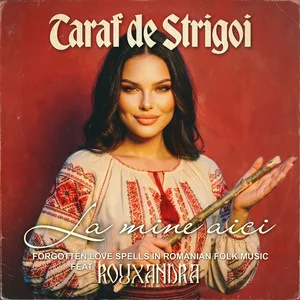
The song made from La mine aici.
Related

 02
02

 03
04
03
04